tattoos
Dynamic Glitter Text Generator at TextSpace.net
Showing posts with label teaching. Show all posts

Tuesday, April 20, 2010

Chapter 85.2: A Song in My Heart and Head (in Praise of Teachers)

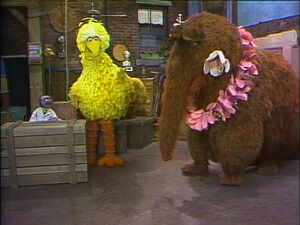
I try not to write too much here about my kids, but lately their music has meandered through my brain a lot. Silly songs, educational songs, songs that should never be played to anyone over the age of three...

But as my girls graduated from the Baby Einstein videos to Sesame Street and Barney, I noticed something shocking: I knew some of these songs! Sure, there were standards like The People in Your Neighborhood and Rubber Ducky. But there was also one about lady bugs that I'd completely forgotten about.

I asked a co-worker what shows she remembered from her childhood. She was born to one of those families that didn't believe in television for many years, so she hadn't seen too much. But as she thought about it, she remembered seeing Barney. To this day, she said, she hums a song about cleaning up as she washes the dishes.

I've always had a thing for songs and song lyrics. I've entertained/pissed off people by singing the lyrics to a shortlived show from the late '70s called Hello Larry, which starred McLean Stevenson, after he left MASH. Long after I composed songs in my head as I walked to school as a kindergartner, I would find music offered me the first entree to a world of creativity.

It pains me to see the arts decimated in public education. I hate to hear about teachers losing their jobs or ridiculed by people who've never tried to teach that they get paid too much. Teaching children is perhaps the most important job in the world. Those that do it should be continually trained to do it better, and classrooms should be kept at relatively small sizes so that children receive the attention they need and deserve — which means that more teachers are necessary.

I know people will disagree with me. I've heard the arguments. Sometimes, those people make excellent points. But if it weren't for my parents and my teachers, I'd not have been able to succeed in the ways that I have.

Monday, September 8, 2008

Chapter 78.9: Photosynthesis, Anyone?

School's back in session. Earlier this summer, Stanford University released a report that found young students fare better when learning complex concepts using "everyday English."

As a case in point, researchers noted that students learning about photosynthesis need to understand a little bit of Latin, a dash of French, and some Greek. The problem, the researchers said, is that students are getting new words and new ideas at the same time. That can be difficult for children. Ok, they may be right. They're certainly right that a child can learn about an apple before they knew how to say "apple."

But what's so wrong with teaching a kid something difficult? As long as you have multiple ways of getting the point across — reinforcing the concepts — then a good teacher should be able to get the lesson across. I think that what they're doing is pointing out the obvious: a child won't learn a complex concept without being able to relate to it at a certain level.

Perhaps I'm not understanding what's so revolutionary. I'll read it again.

Saturday, November 10, 2007

Chapter 69.8: A Mathematician's Proposal


In my daily search for new and interesting news, I recently came across an interesting post on the site of the Carnegie Foundation for the Advancement of Teaching. It was written by a mathematician who was expanding on remarks Paul Krugman made in his blog about economics.

Krugman wrote, "I'll be using this space to present the kind of information I can't provide on the printed page -- especially charts and tables, which are crucial to the way I think about most of the issues I write about." Krugman then introduces a graph that presents a picture of income distribution in the country by displaying the share of total income earned by the richest 10 percent of Americans.

The mathematician, Michael C. Burke, then goes into an interesting discussion about Krugman's observations on the seemingly idyllic period of the 1950s -- the time during which "Middle Class America" became the symbol that it was for much of the '70s and '80s and into the '90s. America's golden period of equality. Krugman had supplied a chart of income distribution, which showed a relative flat period in which income was more equitably shared. In case anyone was unclear, such equality no longer exists in America. Since the 1980s -- the late '80s especially (and I suspect that has a lot to do with the tax reform act of 1986, though I'm no economist) -- the United States has seen its share of income diverge quickly. To show that this isn't simply about which party is in power, the Democrats were in power in Congress during the late '80s and the Republicans had their Newt Revolution in the mid '90s, when Krugman's "Great Divergence" occured; moreover, Reagan and Clinton were the presidents at those respective times.

But Burke has a broader comment to make. He calls for teachers -- especially college professors -- to redesign their curricula.

[M]y larger point here is that the content of our thoughts and the depth of our understanding are dependent on the tools we bring to the task. What we think is intertwined with how we think. And the ability to think in terms of quantitative data, in terms of tables and graphs, is indispensable for understanding our modern world. This should be part of what we teach all our students -- not just students in selected courses or selected majors.

With that aim in mind, I would propose that we begin by redesigning our freshman and sophomore writing programs in order to place a significant emphasis on working with quantitative data, and on the visual representation of that data. We write, after all, to figure out what we think. And we ask our students to write so that they will learn how to think.


This is not the first time I've heard this argument, but I think Burke proposes it well. I don't work as a professor, though I was trained as a teacher, and I've toyed with the idea of tutoring math and English on the side -- perhaps as soon as next fall. Burke is right, in my opinion, but I'm not sure whether his direction is the right one; I think he's right that we need to inform our youth better about how to think and how to recognize absurdities in mathematical "answers." But I think it goes beyond teaching freshman.

I heartily recommend that everyone read John Allen Paulos's book Innumeracy. He cleverly points out how badly most Americans -- not simply students -- handle simple math problems. Percentages, probabilities. He helps readers recognize the flaws in their reasoning. If we can teach a couple generations of Americans how to reason, boy that would help improve our state in the world.

Tuesday, June 19, 2007

Chapter 62.4: Conservative Truth?

Ok, a quick note -- but I'll need to read on. I can't believe what I've just read in the Los Angeles Times: a history teacher got angry because a student used the term BCE (before common era) rather than BC (before Christ), which the student got it off of Wikipedia?! And as a result of this anger, the teacher decided that conservatives needed to create a wiki-based encyclopedia that conveys the conservatives' perspective.

That's ridiculous! The point of an encyclopedia is to convey information in as objective a manner as possible. It should inherently be neither conservative nor liberal, Democrat nor Republican, western nor eastern. I recognize that objective truth is a matter of debate, but that's part of the point too. If this teacher wants to dispute BCE, wonderful! Go for it. But it's not as though it was created by Wikipedia. The term has been around for many years. Personally, I think it's an unnecessary attempt at political correctness: the timeline starts at the same point, so the Christian bias remains intact. But I think Muslims and Buddhists recognize the historical significance of Jesus, regardless of whether they agree with the tenets of Christianity. Jews have a different calendar than Christians; these things coexist without any significant problems, right?

If the teacher wants to complain about the potential for anonymous changing of Wikipedia entries, fine. That's actually being addressed in something called Citizendium. I'd rather complain about why a teacher seems to have a problem with a student venturing beyond the teacher's information in order to learn. The teacher should be helping to mold this student's mind, helping the student to think for himself and assess the veracity of sources of information. Just because a book is published, for example, doesn't mean it's accurate. Interpretations cannot be assumed to be fact. As far as I can tell, BCE is a term of art -- and not a particularly elegant one. But teaching students to only use one perspective is simply ugly.

Sunday, March 11, 2007

Chapter 58.314159: Good Math

Recently, the Seattle Post-Intelligencer posted a commentary calling for a commitment to emphasizing math in the schools. This call is certainly necessary, and long overdue. However, my pessimism may be getting the better of me. I'm not sure we can expect much. As the commentary states, we need better professional development of teachers, with a goal of training them to be more confident in their role. This takes time. No time like the present to start, but I think what we need to do is get math into more subjects; find where math fits into the history class, perhaps. Or make the examples in math class more accessible to kids: you have 500 songs on your iPod, what percentage of the memory is still available for more songs?

I'm not convinced the math block for many students is due to the subject matter. I think a big part of the problem is that math isn't cool. Maybe each student can have a team in a free fantasy league; each kid must keep their team under a salary cap. Work the numbers.

Easy for me to say -- I'm not teaching. Students who are bored are potentially disruptive, and one of the major challenges for education is classroom management. It takes more than teachers who are confident in their abilities to teach math, it takes teachers who are enthusiastic about teaching -- period. That involves a strong educational environment, a supportive administration, etc.

I'm all for emphasizing math, and I agree with Seattle -- home of the Bill & Melinda Gates Foundation -- being at the vanguard of a movement. But this will be a long slog, and the kids will need to see the light at the end of the tunnel. Kids don't implicitly care that the United States' position as an economic leader is imperiled without better math, science, and engineering education. They want to know what it means to them. Once that's been solved, you'll find more eager children.
 

blogger templates | Blogger