tattoos
Dynamic Glitter Text Generator at TextSpace.net
Showing posts with label christmas stories. Show all posts

Saturday, October 25, 2008

History of Christmas

History of Christmas

Christmas (IPA: /krɪsməs/) is an annual holiday that celebrates the birth of Jesus. It refers to both the day commemorating the birth, and also the Christmastide season which that day inaugurates, concluding with the Feast of the Epiphany. The date of the celebration is traditional, and is not considered to be Jesus' actual date of birth. Christmas festivities often combine the observation of the Nativity with various cultural customs, many of which have been influenced by earlier winter festivals. Although nominally a Christian holiday, it is also observed as a cultural holiday by many non-Christians.

In most places around the world, Christmas Day is celebrated on December 25. Christmas Eve is the preceding day, December 24. In Germany and some other countries, the main Christmas celebrations commence on the evening of the 24th. The day following Christmas Day, December 26, is called Boxing Day in the United Kingdom and many countries of the Commonwealth, and called St. Stephen's Day or the Feast of Saint Stephen in Catholic countries. The Armenian Apostolic Church observes Christmas on January 6. Eastern Orthodox Churches that still use the Julian Calendar celebrate Christmas on the Julian version of 25 December, which is January 7 on the more widely used Gregorian calendar, because the two calendars are now 13 days apart.

The prominence of Christmas Day increased gradually after Charlemagne was crowned on Christmas Day in 800. Around the 12th century, the remnants of the former Saturnalian traditions of the Romans were transferred to the Twelve Days of Christmas (25 December – 5 January). Christmas during the Middle Ages was a public festival, incorporating ivy, holly, and other evergreens, as well as gift-giving.

Modern traditions have come to include the display of Nativity scenes, holly and Christmas trees, the exchange of gifts and cards, and the arrival of Father Christmas or Santa Claus on Christmas Eve or Christmas morning. Popular Christmas themes include the promotion of goodwill and peace.
History of Christmas
http://www.christmas-day.org/gifs/history-of-christmas.jpg
History of Christmas


The history of Christmas dates back over 4000 years as the various custom and tradition associated with the festival of Christmas were celebrated centuries before the birth of Christ. The exact day of the Christ child's birth has never been pinpointed. Traditions say that it has been celebrated since the year 98 AD. In 137 AD the Bishop of Rome ordered the birthday of the Christ Child celebrated as a solemn feast. In 350 AD another Bishop of Rome, Julius I, choose December 25th as the observance of Christmas.

The History Of Christmas can be traced to some of the popular festival celebrated by early civilization that gave way to Christmas.

Mesopotamian: New Years
Many of these traditions began with the Mesopotamian celebration of New Years. The Mesopotamians believed in many gods, and as their chief god - Marduk. Each year as winter arrived it was believed that Marduk would do battle with the monsters of chaos. To assist Marduk in his struggle the Mesopotamians held a festival for the New Year. This was Zagmuk, the New Year's festival that lasted for 12 days.

Persians and Babylonians: Sacaea

The Persians and the Babylonians celebrated a similar festival called the Sacaea. Part of that celebration included the exchanging of places, the slaves would become the masters and the masters were to obey.

Europeans: Winter Solstice

Early Europeans believed in evil spirits, witches, ghosts and trolls. As the Winter Solstice approached, with its long cold nights and short days, many people feared the sun would not return. Special rituals and celebrations were held to welcome back the sun.

Scandinavia: Yuletide
In Scandinavia, during the winter months the sun would disappear for many days. After thirty-five days scouts would be sent to the mountain tops to look for the return of the sun. When the first light was seen the scouts would return with the good news. A great festival would be held, called the Yuletide, and a special feast would be served around a fire burning with the Yule log. Great bonfires would also be lit to celebrate the return of the sun. In some areas people would tie apples to branches of trees to remind themselves that spring and summer would return.

Roman: Saturnalia
The Roman's celebrated their god Saturn. Their festival was called Saturnalia which began the middle of December and ended January 1st. The celebration would include masquerades in the streets, big festive meals, visiting friends, and the exchange of good-luck gifts called Strenae.

The 25th was not only sacred to the Romans but also the Persians whose religion Mithraism was one of Christianity's main rivals at that time. The Church eventually was successful in taking the merriment, lights, and gifts from the Saturanilia festival and bringing them to the celebration of Christmas.
http://www.countryliving.com/cm/countryliving/images/Antique-Santa-Claus-Figurines-HTOURS1206-de.jpg

History of Christmas

Sunday, October 19, 2008

Christmas Fun

Christmas Fun

Xmas Fun is dedicated to the child in all of us. Fun for all ages. Christmas songs, jokes, games, stories, downloads, etc. Lots of Christmas fun!


Christmas Fun

Christmas Fun

Christmas Fun

Christmas Fun

Sunday, October 5, 2008

Christmas Recipes

Christmas Recipes
Chestnut and Hazelnut Cake Recipe

The recipe for this beautifully moist Chestnut and Hazelnut Cake appears exclusively (with permission) from A Year of Family Recipes (pub. Bettys and Taylors, RRP £25) by Lesley Wild. The book (read review) is the first produced by Bettys, the famous Yorkshire tea shop. This cake comes from Switzerland where sweet chestnut trees grow in profusion, particularly in the south of the country around the lakes of Maggiore and Lugano – where Switzerland meets Italy. It would make a perfect treat for Christmas supper.

Chestnuts, in both countries, are often dried and ground into flour which is then used in baking during the winter months. Chestnuts are not only low in fat and calories, but high in vitamin C and potassium. They also contain significant amounts of vitamin B. Because it is so rich, Lesley Wild says that she prefers not to decorate it with icing – a light dusting of cocoa powder just finishes it off.

The texture of the cake improves if it is kept for a day or two to mature before being eaten – it also keeps well in the freezer for several weeks. For a gluten free version, substitute the flour with the equivalent weight of extra ground almonds.

Ingredients - Makes a 20cm diameter cake

* 4 large eggs
* 280g caster sugar, divided into 2 halves
* 200g chestnut purée
* 100g plain white flour
* 100g ground hazelnuts
* 50g chopped hazelnuts
* 50g ground almonds
* cocoa powder for dusting

Method

1. Preheat the oven to 175ºC (gas mark 3½). Line the base and sides of a 20cm diameter cake tin (preferably springform or loose-bottomed) with baking parchment, using a little melted butter to keep it in place.
2. Separate the eggs, putting the whites to one side. Put the yolks and one half of the caster sugar in a large mixing bowl. Whisk together until pale and creamy and doubled in volume. Mix in the chestnut purée, then fold in the flour, sifting it through a sieve. Finally, gently stir in the ground and chopped hazelnuts followed by the ground almonds.
3. Place the egg whites in a clean bowl and whisk thoroughly until they form soft peaks. Add the remaining sugar and continue to beat until thick and glossy. With a large metal spoon, stir a little of the egg-white mixture into the nut mixture to slacken it, then gently fold in the remainder of the egg-white mixture.
4. Spoon into the prepared cake tin and place in the preheated oven for approximately 50 - 55 minutes until firm to the touch and golden brown. To test, pierce with a clean skewer – if it comes out clean, the cake is ready. Allow to cool completely before sprinkling with cocoa powder. Delicious with a dollop of whipped cream or crème fraîche.

Thursday, October 2, 2008

Christmas Snow Scenes

Christmas Snow Scenes
Snow, Ice and Christmas often go together, although why it should is a bit strange! There is no snow or ice in the Christmas story told in the Bible. However, snow does fall in Israel. Bethlehem and Jerusalem are on a range of hills that go north to south between the Mediterranean Sea and the Jordan valley. The top of these hills are about 1600 ft (500 m) high. The hills often have very cold weather from November to April and snow can often fall. So, although the Bible story may not have snow in it, Jesus may well have seen some snow in his life!

Christmas Snow Scenes

Christmas Snow Scenes
http://issachar.gorman.cc/images/2004/December/Christmas%20Snow%202004.jpg
Christmas Snow Scenes

Source: sharewareplaza, princes-trust.offiscope, defamer, davrodigital, i.d, megascreensavers, majorlycool, alienjesus, issachar.gorman

Wednesday, October 1, 2008

Christmas Stocking Stuffers

Christmas Stocking Stuffers
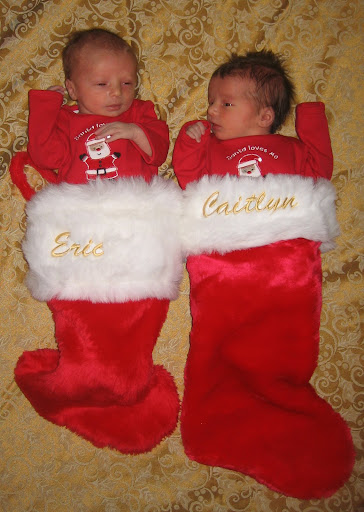
A Christmas stocking is an empty sock or sock-shaped bag that children hang on Christmas Eve so that Santa Claus can fill it with small toys, candy, fruit, coins, or other small gifts when he arrives. These small items are often referred to as stocking stuffers or stocking fillers. In some Christmas stories, the contents of the Christmas stocking are the only toys the child receives at Christmas from Santa Claus. Other presents are wrapped up in wrapping paper and placed under the Christmas tree. Tradition in western culture dictates that a child who behaves badly during the year will receive only a piece of coal.

By tradition, the stocking is hung on the fireplace mantel, but, since many contemporary homes do not have fireplaces, stockings may be hung in almost any location.

Christmas Stocking Stuffers

The true story of Santa Claus and Christmas Stocking begins with Nicholas, who was born during the third century in the village of Patara. At the time the area was Greek. His wealthy parents died in an epidemic while Nicholas was still young. Obeying Jesus' words to "sell what you own and give the money to the poor," Nicholas used his whole inheritance to assist the needy, the sick, and the suffering. He dedicated his life to serving God and was made Bishop of Myra while still a young man. Bishop Nicholas became known throughout the land for his generosity to the those in need, his love for children, and his concern for sailors and ships.

Through the centuries many stories and legends have been told of Saint Nicholas' life and deeds. These accounts help us understand his extraordinary character and why he is so beloved and revered as protector and helper of those in need.

One story tells of a poor man with three daughters. In those days a young woman's father had to offer prospective husbands something of value—a dowry. Without a dowry, this poor man's daughters were unlikely to marry.

One night after the daughters had washed out their clothing, they hung their stockings over the fireplace to dry. That night Saint Nicholas, knowing the despair of the father, stopped by the man's house after the family had gone to bed. He peeked in the window and saw the daughters' stockings hanging by the fire.

Inspiration struck Saint Nicholas, and he took three small bags of gold from his pouch and threw them carefully, one by one, into the stockings. The next morning when the daughters awoke, they found their stockings contained enough gold for them to get married. The bags of gold, tossed through an open window, are said to have landed in stockings or shoes left before the fire to dry.

This led to the custom of children hanging stockings or putting out shoes, eagerly awaiting gifts from Saint Nicholas. Sometimes the story is told with gold balls instead of bags of gold. That is why three gold balls, sometimes represented as oranges, are one of the symbols for St. Nicholas. And so St. Nicholas is a gift-giver.

The tradition began in many European countries. Originally, children simply used one of their everyday socks, but eventually special Christmas stockings were created for this purpose. Today, stores carry a tremendous variety of styles and sizes of Christmas stockings, and Christmas stockings are also a popular homemade craft. Many families create their own Christmas stockings with each family member's name applied to the stocking so that Santa will know which stocking belongs to which family member.

Christmas Stocking Stuffers

Source: images-cdn01.associatedcontent, christmas, blogfabulous, greenlivingonline, malaland, marthastewart, teamsugar


blogger templates | Blogger