tattoos
Dynamic Glitter Text Generator at TextSpace.net
Showing posts with label Hall of Fame. Show all posts

Monday, January 12, 2009

Chapter 81.6: Hot Dog and Rice

The Baseball Hall of Fame will have at least two new members. In my opinion, both Rickey Henderson and Jim Rice deserve the laurels they will finally wear. Henderson — baseball's greatest base stealer and the consummate leadoff hitter — was a no-brainer. The only issue for him was whether he actually was finished playing.

Though he turned 50 on Christmas day, Henderson probably could still hit .280 and provide 15-20 stolen bases and score 75 runs if he played in 2009. He was always in fantastic shape and his skills hadn't fallen apart like those of many older players. With more than 3,000 hits, 1,400 steals, and 2,000 runs, his election was a foregone conclusion.

Rice, on the other hand, required all fifteen of the annual ballots before he was elected. In my view, he was one of the greatest power hitters of the '70s and '80s. If you look at his numbers, you see that he was quite productive for at least ten years. The ongoing criticism of him was that he didn't get along well with the media. I just don't understand why that should matter so much.

I could write more (and better) on both these players, and hopefully I will, but if nothing else, I say congratulations to two of baseball's greatest.

Tuesday, August 19, 2008

Chapter 78.5: My, How Things Have Changed

Not so long ago, the next three Mets games would have been an electric series of games. The Braves are coming to town to play my beloved Mets. Alas, these are not the same Braves that won division titles every completed year from 1991 to 2005. (I still think the Expos would have won in 1994, but the strike killed baseball and essentially pulled the plug on that unfortunate franchise.)

One of the remaining stalwarts of those excellent teams from Atlanta that led the National League East for more than a decade is Larry Jones — better known as Chipper. In my opinion, he's a likely Hall of Famer, albeit not a surefire, first ballot honoree.

In an interview with the New York Times, he reflected on those heady days of 1999, when Bobby Valentine managed the Mets and Chipper was one of the most dominant bats in the NL. After taking two of three in a summer series, Jones commented about how Mets fans "can go home and put on their Yankees jerseys." While he was apparently inspired by some yo-yo who wore one of those split Mets/Yankees shirts, Jones was clearly not aware of how deep the divide can be between Mets and Yankees fans.

I suspect it's just as prominent between Cubs and White Sox fans, and maybe even between Dodgers and Angels fans.

Of course, the Braves can still hurt the Mets, who hold a tenuous 1.5 game lead over our latest chief rival, the Phillies. Losing the series to the Braves wouldn't destroy the Mets, but if they damage them in these dog days of August, the Mets could find themselves unable to shake off the inevitable questions about last year's epic, infamous demise.

We'll see what happens. For some reason, I think this could be an exciting season, regardless of how mediocre the Braves have become.

Saturday, August 16, 2008

Chapter 78.4: Is Glavine Done?

Though the 2007 baseball season is long since finished, Mets fans have not forgetten the terrible way it ended. After weeks of bullpen failures and a lack of clutch hitting, John Maine took a no-hitter deep into the game, and while he wasn't able to toss the first no-no in Mets history that day, he was able to win the game and get the Mets back into a tie for first place.

The next day, Tom Glavine couldn't get out of the first inning.

So, while it may not be fashionable among Mets fans, I was saddened to read that his career may be over. Glavine's injured elbow has caused him to shut it down for 2008, and he hopes the Braves will take him back in 2009; he doesn't want to play anywhere else, he said.

Though I've never met him, I have a lot of respect for Tom Glavine. He always worked hard, he answered reporters' questions, and he genuinely seemed to understand a fan's perspective. Plus, he is and will always be a family man. Some of these players talk about how a decision has to make sense for their family, but then they take a few million dollars more to go elsewhere. He did it too, but for some reason, I believe his family meant more to him than the money.

I was proud to see him win his 300th game as a Met. I'm happy he played for my favorite team and that I saw him pitch a few times.

So if this is the end, I'm sad for him and for baseball. But I don't think he's too worried. He's got a family that loves him and he's got nothing to be ashamed of overall — not even that last 1/3 of an inning in 2007 (though I didn't think that at the time).

Tuesday, January 8, 2008

Chapter 71.55: Goose and Rice


The Baseball Hall of Fame results are in, and I can't disagree with the selection of Rich "Goose" Gossage. I'll admit I've had my misgivings about his Hall of Fame at times, but his inclusion feels right. I'm not going to gripe about it.

That Jim Rice still isn't in, however, is a mistake. I'd like to get onto a high horse about what a travesty of justice it is, but I also understand some of the arguments against him. While he wasn't the same player in 1988 as he'd been in 1978, he was still a fearsome hitter. Still, I know of few other hitters that seemed to come through in the clutch as well as he did. And as a kid who hated the Yankees, how I loved to see Jim Rice stand in the box against one of the pitchers from the Bronx.

How appropos it would have been for Rice and Goose to enter the Hall together, a member of the Red Sox and the Yankees. Especially this coming summer -- thirty years after the exciting 1978 season. A lot of folks in the New York area forget that there was a newspaper strike back then, so there was even less news about what the teams were doing than we'd see in this Internet era. We often had to settle for the local television news updates and listen to the radio. And then there was also Pete Rose's hitting streak. Talk about an exciting baseball season, especially for a kid who was crazy for the sport!

Growing up in the New York area, I saw Goose pitch a lot and wished my Mets had someone like him (of course, those Mets teams had little need of a fireballing stopper, as they were sometimes called in those bygone days, thirty years ago -- "closer" came later when Dennis Eckersly changed everything in Tony LaRussa's bullpen.) It almost seemed unfair that the Yankees could have Sparky Lyle and Goose Gossage. Of course, Lyle was gone soon enough, languishing in Texas after the '78 season and a couple other places. Of course, looking back, the Yankees made the right decision (perish the thought!), despite Lyle entering the '78 season as the reigning Cy Young Award winner; he was in his 30s, and his career was on the decline.

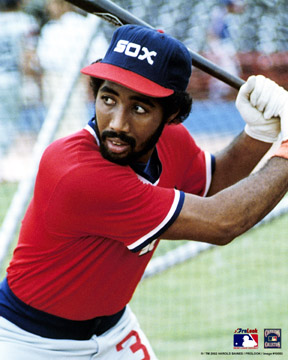
Anyway, back to the Hall vote: I'm not too surprised at Tim Raines receiving 25 percent of the vote. It's a hard road ahead if he hopes to ever gain entrance. Even harder is the path for Harold Baines, who I think should be the first DH elected. Once again, he only had 5 percent. His chances are unlikely to get any better without a major shift in how baseball writers consider the designated hitter. If I can change my mind, however, surely they will eventually too. For Baines' sake, I hope it happens before another thirteen years pass.

But I congratulate Goose Gossage on being voted into the Hall of Fame. You were one of the best relievers of all time. I hope George Brett hands you a pine tar-coated bat.

Saturday, January 5, 2008

Chapter 71.5: Baines Motel in Cooperstown


I was poking around some blogs recently and found a good discussion about the Hall of Fame prospects of Harold Baines. While I never lived in Chicago or any of the cities where Baines starred, I'm enough of a baseball fan to know a pure hitter when I saw him.

Baines was a clutch performer and his RBI totals back me up. While he only topped 100 RBIs twice, he averaged more than 90 per year. That's not too shabby, especially when you're talking about a 22 year career. He nearly reached 2,900 hits, and I'm sure that if the work stoppages hadn't occurred he'd have hit at least another 125-130 knocks, which would have placed him close enough to 3,000 that the White Sox (or some AL team) would have brought him back for a season to garner the last remaining hits to reach the magic number.

I suppose the knock against Baines is that he was a designated hitter; his 1,652 games at DH remain the all-time high, I believe. But the DH has been around for 35 years now and even traditionalists like myself recognize that it's a part of the game. I believe it's time for the best DHs of all time -- Baines and Edgar Martinez -- to be shown the respect they deserve. Baines now, and Edgar in a couple years when he's eligible to be voted into Cooperstown.

Baines never got the accolades that many of his contemporaries received, and the White Sox were rarely very good during that era. He did play in a World Series for the A's (1990, in the loss to the Reds) and his lone hit was a two-run homer. And he was an all-star as late as 1999 -- two years before his retirement -- albeit for a mediocre Orioles club, before he was traded to the Indians for their successful playoff push (and eventual post-season loss). Baines was one of those guys that winning clubs liked to get in their clubhouse: a winner who led by example. His number was retired by the White Sox while he was still playing, and un-retired for his two returns.

While I don't think we'll see him inducted when the announcement is made on Tuesday, I hope to see his numbers increase. That only 5.3 percent of baseball writers voted for him last year is a crime; Harold Baines deserves better.

Tuesday, December 18, 2007

Chapter 70.9: The Mitchell Report


There's something I must admit about steroids: I've not read the Mitchell Report. I've downloaded it, but it's 409 pages long, and I simply haven't had the time to devote to it yet.

But I've read several news stories, including this one about the Todd Hundley and David Segui connections to the former Mets clubhouse guy, Kirk Radomski, who was dealing the drugs. As a baseball fan, I'm pretty pissed off that so many players -- and you know that it wasn't only the ninety or so that are list -- were using human growth hormone or a variety of steroids. Lots of people talk about how this is a victimless crime; "No one got hurt." Personally, I think they have no idea what they're talking about.

If I were the last cut for my position and didn't make the team because the guy above me was cheating, I'd be furious. It might even be enough for me to stoop to the same level. That's one argument about why Barry Bonds started taking the clear and the cream; he was so jealous of the accolades that Sammy Sosa and Mark McGwire received that he said, "Just wait to see the numbers I put up if I took that stuff."

I used to be in the camp that would argue for including Bonds in the Hall of Fame because he played like one of the all-time greats before using. But my sentiments are changing. With Roger Clemens too. I've never liked either of these players, but I had respect for their abilities. Clemens was always the guy who worked harder than everyone else. I don't doubt that he retained that work ethic; the problem is he took advantage of a substance he had no legal right to use. Who wouldn't want to heal faster than usual and gain strength when your career depends on it? Before Clemens left Boston, he was a fading great; then he went to Toronto, won a couple of Cy Young Awards, and placed him on the path toward more than 350 wins. Better than Greg Maddux? No. Maddux, Glavine, these guys were (and are) true ball players, not bullshitters. I think it's telling that a group of Little League coaches in Texas may disinvite Clemens for a speaking engagement.

One of the articles that I read recently that surprised me was by Murray Chass of the New York Times. He pointed out that sixteen years ago Commissioner Fay Vincent issued a memo to teams. The following is from that article:

Mitchell, however, cites one development in his report that may be its most overlooked element. Mitchell mentions a June 7, 1991, memo Vincent wrote to clubs when he was commissioner in which he added steroids to baseball’s list of banned substances.

After the enactment of a federal law, Mitchell wrote, Vincent advised clubs that baseball’s drug policy prohibited the use of “all illegal drugs and controlled substances, including steroids or prescription drugs for which the individual” doesn’t have a prescription.

The memo should have gotten the clubs’ attention, but it didn’t.

“My memo was totally ignored by all,” Vincent wrote in an e-mail message Sunday. He added: “The point was to alert the baseball world to the recent inclusion of steroids as illegal prohibited substances under federal law. But the union did nothing to underscore my memo and I think the clubs ignored it as irrelevant.”


I don't know what effect this will have to counter the argument that "no one knew" what was going on. If nothing else, it should shut up the stupid fans who say "they weren't doing anything illegal." Yes, they were. Steroids were -- and are -- illegal to possess without a prescription. Perhaps some players received legally prescribed steroid kits, but if they're acquiring it through guys like Radomski, then it's still illegally obtained.

Perhaps my anger will be assuaged with time, but this is not a story that will be quieted by spring training. This is a cloud over the game for the forseeable future. For at least five years and probably more. Rafael Palmeiro will never be elected to the Hall of Fame. Neither will Mark McGwire or Sammy Sosa, and even Bonds and Clemens will probably miss out on being elected in their first year of eligibility.

One last note for now: The Mitchell Report is effectively an argument; the players basically kept their mouths shut, so the court of public opinion is decidedly against the quiet ones. But the Mitchell Report can't be taken as the definite truth -- not yet. But I think all of the named players will have a difficult time proving that Mitchell was wrong.

Thursday, December 6, 2007

Chapter 70.3: Hall of Almost


Somehow I missed this piece in the New York Times about the "Hall of Merit." Years ago, I had a similar idea -- that is, I consider some players members of the "Hall of Almost Famous."

What these folks are doing is admirable: they're trying to evaluate players from the whole of baseball history using the benefit of a broader array of statistics. No one really cared about on-base percentage until the mid-1980s, for example. Correction -- most baseball writers didn't care about on-base percentage. Or WHIP for pitchers. That is, walks plus hits per innings pitched.

It's not as though people didn't think of those things, however. I remember listening to Ralph Kiner announcing Mets games when Jerry Koosman was pitching for them in the late '70s. He'd talk about how his record was bad, but he was pitching well. "You can tell that because he's given up nearly a hit an inning," the ol' power hitter said. I've often felt Kiner was an underrated announcer. I'd like to see him considered for the Hall of Fame as an announcer as well as a player.

But back to my point. The Baseball Think Factory has reevaluated all the game's players and allowed their small group to vote players into their own Hall of Merit. Players like Joe Adcock, Bert Blyleven, Jim Kaat, Tommy John, Vada Pinson should be reconsidered. I think they'd probably all remain in the Hall of Almost; I've not checked yet what Baseball Think Factory has determined. I'd say Gil Hodges too, though I know there's a strong contingent of Brooklynites and Dodger fans who'd like him in the actual Hall of Fame.

I've read several arguments about whether Tim Raines belongs in the Hall of Fame; he's eligible this year for the first time. I watched him play a lot when he was an Expo, and he was an excellent ballplayer. I'd have loved to have him on the Mets. Back in the '80s. I don't know if it was all the running he'd done early in his career, all the years on the turf in Montreal, or the drugs he did in the '80s, but once he turned thirty, his career went into a slow but steady decline. When he arrived in New York as a Yankee, he remained a solid complementary player. The question, then, is whether his years as the best leadoff man in the National League were enough to warrant his induction into the Hall.

The Hall of Merit says yes. Matt's Hall of Almost Famous puts him on the bubble. If I were a voter, I'd strongly consider him. But I don't think he should gain immediate induction. Others disagree with me, but I think players voted in during their first year of eligibility are more special, more worthy. I think there's a major difference between Tom Seaver and Phil Niekro. Niekro had more wins and played mostly on worse teams, but Seaver was simply on a different level. And it's not simply because Seaver threw a great fastball and slider and Niekro was a knuckleballer. Lots of people don't even think Niekro should be in the Hall at all.

The article also says Dave Stieb should be in the Hall of Fame. I thought he was a very good pitcher, and it's a shame that he just missed out on a perfect game, but I just don't think he's a Hall of Famer. He pitched in an era with lots of mediocre pitchers, it's true, but he never came close to winning the Cy Young Award, never won twenty games in a season... How can you say he was one of the best pitchers of his era? Because he had a good WHIP? That's true, but is that really enough? Ask Jerry Koosman. His ERA was better than Stieb's, posted a nearly identical WHIP, won 222 games (while playing for some really abysmal Mets teams), and came in second in the 1976 Cy Young Award voting. Where's the hue and cry for putting Koos into the Hall?

Koosman was a darn good pitcher. But he's not a Hall of Famer. Neither is Dave Stieb. Was Tim Raines better than Lou Brock? There's lots of statistics that would say yes. But Brock may have been a more important player. I think that matters too -- at least to Hall of Fame voters.

Well, I suppose I should read the Factory site. I'd enjoy a good baseball argument tonight.

Sunday, August 5, 2007

Chapter 65.300: Way to Go Tommy G.


Congratulations to Tom Glavine for his 300th career regular season victory. While he's the fourth pitcher who wore a Mets uniform to accomplish the feat (Spahn, Seaver, Ryan, Glavine), he's the first to do it in a Mets uniform. As a lifelong Mets fan, I'm pretty pleased and happy for him. I wish him all the best. He'll go into the Hall of Fame as a Brave, but he's been a good Met.

Thursday, June 28, 2007

Chapter 63: Milestones


Some significant milestones are in sight for many future Hall of Fame baseball players. Today, Frank Thomas became the twenty-first player to hit 500 home runs (before being ejected from the game). And it's likely that sometime this weekend Craig Biggio of the Astros will become the twenty-seventh to reach 3,000 hits for his career. [Correction: Biggio knocked five base hits last night to surpass 3,000. Congratulations Craig!] Both are almost certain Hall of Famers. Thomas won two Most Valuable Player Awards in the 1990s, and while Biggio has started to slow down, he's been one of the more consistent hitters in the National League since 1988.

But they're not the only people who have significant milestones ahead of them. Of course, Barry Bonds is the most obvious, with just a handful of home runs to go before he ties Hank Aaron's record of career home runs. I'm no fan of Bonds, whose reputation has been dragged through the mud due to his suspected steroid or human growth hormone use. It's sad, too, because he was a certain Hall of Famer before he seems to have started using the substances. Add on his career-long surliness and attitude problems, and you probably have as many people hoping his hamstring snaps as he's circling the bases on 754, if not sooner, than rooting for him to break Aaron's record.

The guy I'm rooting for to reach his personal milestone is Tom Glavine, who is now three wins away from 300 for his career. After a stellar career with the Atlanta Braves, where he won two Cy Young Awards, he came to the Mets and has been solid. There was a point last year when I thought he might be able to win another Cy Young award; had he not been left with so many no decisions and reached 20 wins, he probably would have. I know a lot of Mets fans are sick of his soft-tossing and picky nibbling at the corners, but I'm a fan of smart pitching, and I enjoy seeing him work and listening to him talk about his craft.

Another craftsman is Roger Clemens, though I think we're finally seeing the final season of his remarkable career. He needs one more win to reach 350, and even though the Yankees suck, he should be able to get it despite his slowing fastball.

With such achievements in the near future, I wouldn't be surprised if Major League Baseball did something during the All-Star Game to recognize the achievements -- particularly for Thomas and Biggio. (To Bud Selig's happiness, Bonds will likely not have reached the Aaron mark by the All-Star Game.) Though Biggio doesn't deserve a spot in the game itself, I think it's a worthwhile gesture for these guys.

Tuesday, November 28, 2006

Chapter 51.7: Kids in the Hall

It's Hall of Fame voting time again. (No, I don't have a vote.) This year's three big new names are Tony Gwynn, Cal Ripken, and Mark McGwire. Gwynn and Ripken are obvious HOFers, so I won't even belabor that debate. And McGwire, well, that's something else entirely. Given what's been mentioned on the radio and online lately, a lot of voters have decided to leave him off their ballots -- quite possibly enough to deny him election this year. Fair play. But will that happen next year too? Is he now forever left in the background because of the unproven (but likely) accusations of using enhancements? Time will tell, and it will speak loudly. Personally, I think voters eventually will acquiesce and vote him into the Hall and others will decry it as hypocrisy.

On another issue, I'd like to throw out these names for the Hall of Almost Famous: Jim Rice, Goose Gossage, Bret Saberhagen. (There are others too.) In my opinion, Rice was a great hitter and deserves enshrinement. Gossage too, because he helped change the role of relievers. But I don't think either will get in. Rice's numbers were short of most of the major metrics (e.g., 500 HRs, 3,000 hits, 1,500 RBI) and reportedly his attitude annoyed the writers who vote at this point, but he came darn close last year so perhaps there's hope. Goose? It's a harder sell. No one seems to remember that after he left the Yankees -- well, at least after the Padres -- he became just another reliever. Other than his final year (with Seattle!) he hadn't finished more than half the games he pitched; this man was not a closer the final seven years of his long career. But he had several years as one of the best. Of course, his time with the Yankees is his claim to fame, and while he was the most feared reliever at that time, I'm not sure he kept that status long enough for enshrinement. The man wasn't Mariano, whose eventual enshrinement is a foregone conclusion. Saberhagen? Excellent for a few seasons (two Cy Young awards), but not otherwise close to enshrinment. He just didn't have it for long enough to deserve it.

Just another guy whose baseball card is worth a few pennies more than the common player.
 

blogger templates | Blogger